---
title: "8.1 General"
chapter: "8 BPMN Core Structure"
source: "OMG BPMN 2.0.2 — formal/2013-12-09"
pages: "47-49"
---
> 8 BPMN Core Structure · páginas 47-49 · [índice](../README.md)
## 8.1 General
**NOTE:** The content of this clause is REQUIRED for all **BPMN** conformance types. For more information about **BPMN** conformance types, see page 1. The technical structuring of **BPMN** is based on the concept of extensibility layers on top of a basic series of simple elements identified as *Core Elements* of the International Standard. From this core set of constructs, layering is used to describe additional elements that extend and add new constructs to the International Standard and relies on clear dependency paths for resolution. The XML Schema model lends itself particularly well to the structuring model with formalized import and resolution mechanics that remove ambiguities in the definitions of elements in the outer layers of the International Standard.
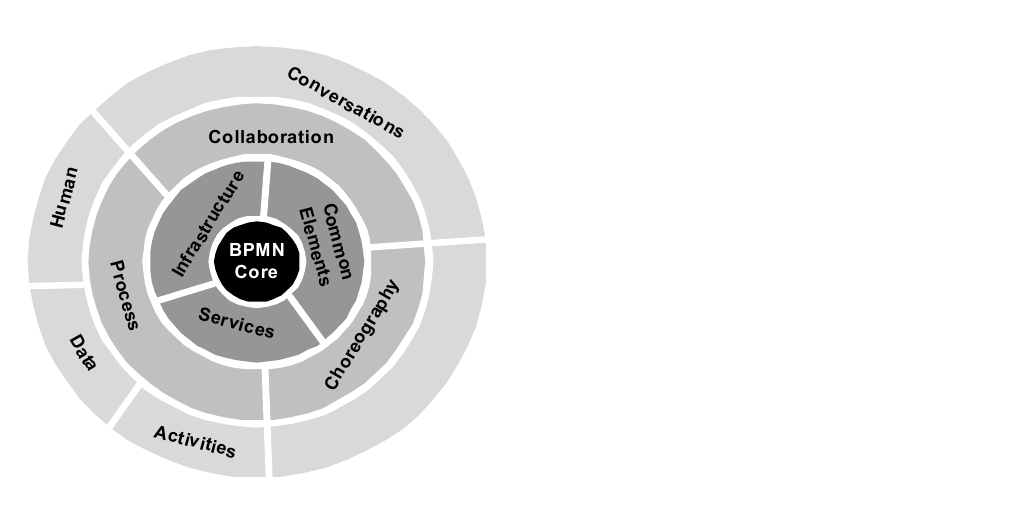
*Figure 8.1 – A representation of the BPMN Core and Layer Structure* (p. 47)
Figure 8.1 shows the basic principles of layering that can be composed in well defined ways. The approach uses formalization constructs for extensibility that are applied consistently to the definition. The additional effect of layering is that compatibility layers can be built, allowing for different levels of compliance among vendors, and also enabling vendors to add their own layers in support of different vertical industries or target audiences. In addition, it provides a mechanism for the redefinition of previously existing concepts without affecting backwards compatibility, but defining two or more non-composable layers, the level of compliance with the International Standard and backwards compatibility can be achieved without compromising clarity.
The **BPMN** International Standard is structured in layers, where each layer builds on top of and extends lower layers. Included is a *Core* or kernel that includes the most fundamental elements of **BPMN**, which are REQUIRED for constructing **BPMN** diagrams: **Process**, **Choreography**, and **Collaboration**. The *Core* is intended to be simple, concise, and extendable with well defined behavior. The *Core* contains four sub-packages (see Figure 8.2):
1. Infrastructure: Two elements that are used for both abstract syntax models and diagram models.
2. Foundation: The fundamental constructs needed for BPMN modeling.
3. Service: The fundamental constructs needed for modeling services and interfaces.
4. Common: Those classes which are common to the layers of Process, Choreography, and Collaboration.
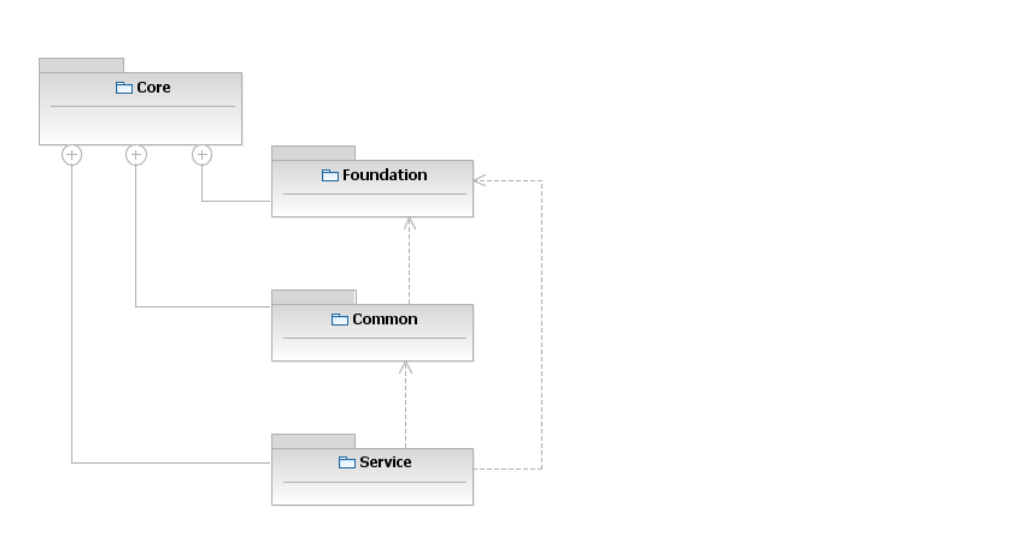
*Figure 8.2 – Class diagram showing the core packages* (p. 48)
**NOTE:** To simplify the diagram, the Infrastructure package is not shown in Figure 8.2. Figure 8.3 displays the organization of the main set of BPMN core model elements.
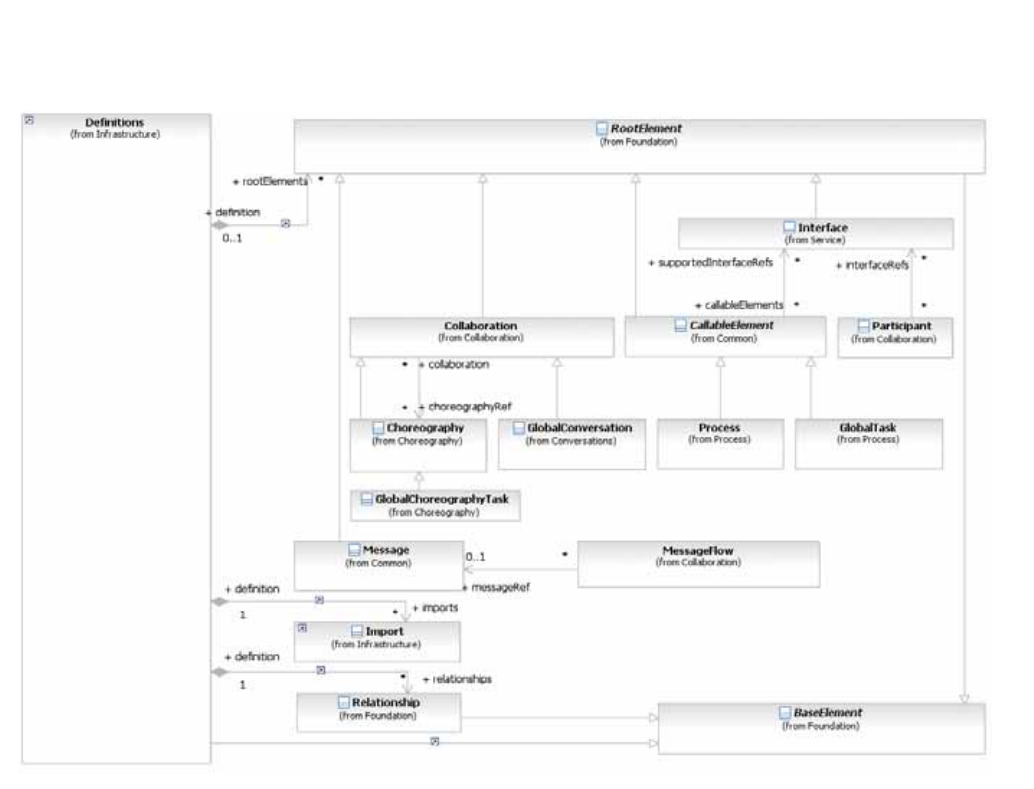
*Figure 8.3 – Class diagram showing the organization of the core BPMN elements* (p. 49)